In Week 12 of Advanced 3D Computer Animation, Professor Ting Liu Ting Liu introduced me to breathing animation and how the principles of overlapping are applied to create subtle and realistic life within a character. She explained that breathing is not a single movement of the chest but a chain reaction where different body parts respond with slight delays.
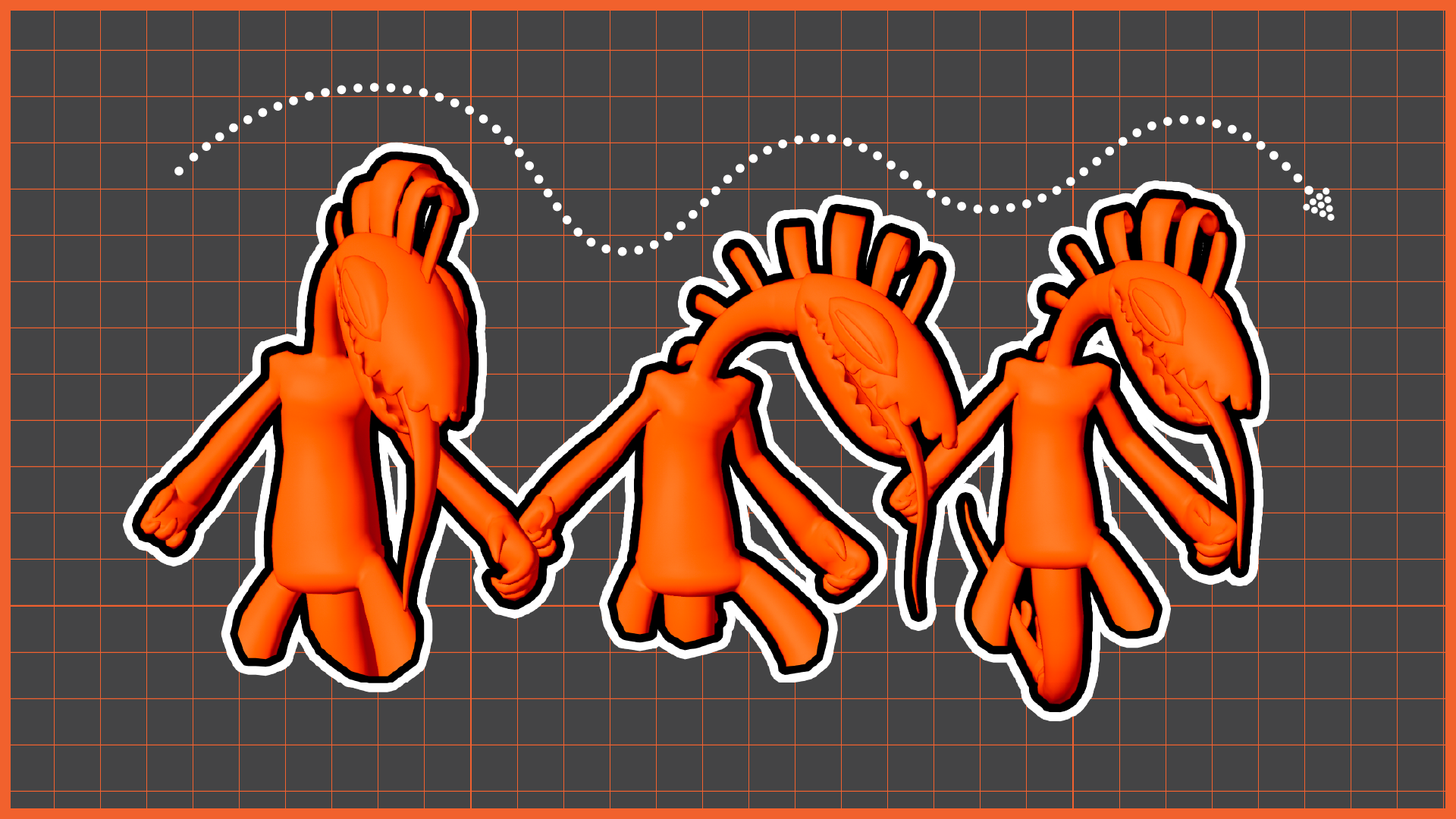
She provided a reptilian creature rig and conducted a practical demonstration showing how each body control contributes to the breathing cycle. The primary movement started from the chest, where the expansion and contraction of breathing were animated. She then demonstrated how this movement transfers through the shoulders, head, arms, and other body parts with different timing offsets. The creature also contained a long tongue, which required additional overlapping and follow-through to make the movement appear natural.
Step 1: Developing the Animation
I developed my own breathing animation using the same principles. I animated the chest movement as the main source of the action and then added secondary movements throughout the body. I decided to customize my animation by reducing the tongue movement and focusing more on the movement of the shoulders and upper body to give the creature a stronger sense of weight and presence.
Step 2: Receiving the feedback
After submitting my animation, I received encouraging feedback from Professor Ting that:
“Your breathing animation has a good sense of weight and the shoulder movement is working effectively”.
“The choice to customize the movement instead of directly copying the demonstration helps make the animation feel more personal and observational.”
Step 3: Rendering the Animation
This week improved my understanding of subtle animation. I learned that small movements such as breathing are equally important as larger actions because they communicate that a character is alive. The use of overlapping timing and secondary motion allowed me to create a more believable and organic performance.