

In Week 06, of Design for Animation, Narrative Structures, and Film Language with Professor Nigel Mairs, we focused on mise-en-scène and its critical role in animation. Unlike live-action, every single element in an animated frame is intentionally created, from the background shapes to props and lighting. The class reminded me that in animation, there is no accidental composition; everything you see is a deliberate choice by the animator to communicate a story, emotion, or theme.
I explored how mise-en-scène influences narrative and audience perception. For example, the placement of a character in the foreground or background, the size of objects in relation to each other, and the use of light and shadow all subtly direct the viewer’s attention and shape emotional responses. Even colour choices can affect tone, a warm hue might suggest safety, while a cold colour can evoke tension or isolation. In animated works, these decisions are amplified because every visual element is designed from scratch, nothing is incidental.
We also briefly discussed the relationship between mise-en-scène and audience reading. A scene can subtly communicate political, social, or cultural commentary without ever using dialogue. This resonated with my ongoing research into hidden political agendas in animation. For instance, how backgrounds, crowd scenes, or visual cues can reinforce stereotypes, critique societal inequality, or highlight power structures. I realized that even in animated features designed for children, mise-en-scène carries meaning beyond the immediate story.
Overall, this week reinforced that in animation, every visual element matters. Mise-en-scène is more than decoration; it is a language that conveys story, emotion, and subtext. Learning how to analyse and plan frame composition gives animators the tools to guide audience perception and create layered, meaningful narratives. I’m excited to apply these insights to my own research and see how careful attention to visual elements can reveal deeper social and political commentary in animation.
MISE-EN-SCENE ACTIVITY
Research Activity 1: Snow White (Disney, 1937)
a) Settings & Props
The Witch’s alchemy chamber uses low-key lighting, dark textures, and symbolic props like skulls and a cauldron to reinforce danger and evil, while Snow White’s cottage is bright and domestic, symbolizing safety and innocence.
b) Costume, Hair & Make Up
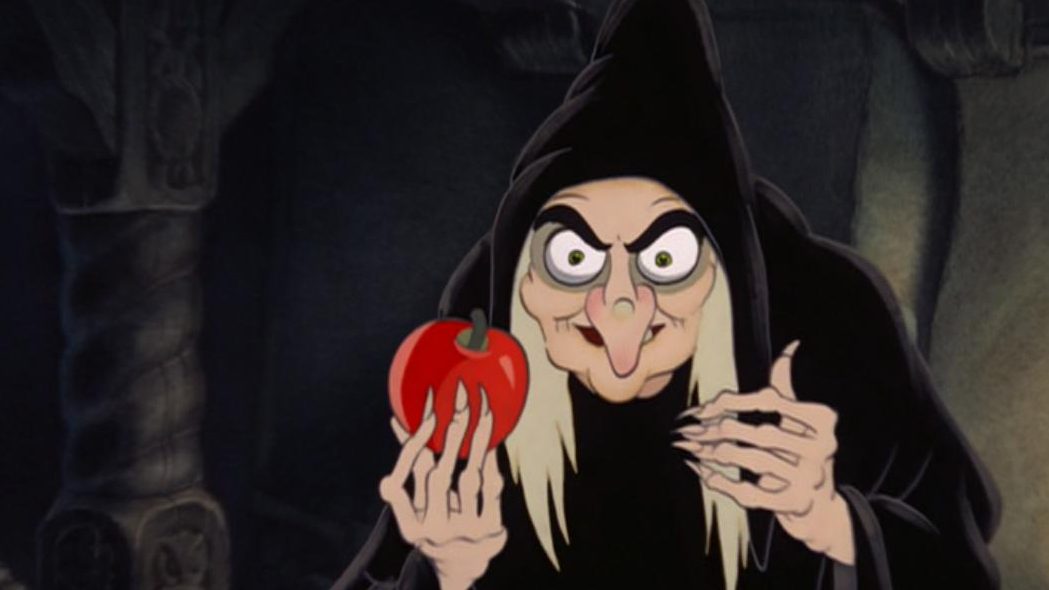
The Witch’s dark, angular costume and aged features visually communicate corruption, while Snow White’s bright dress, red ribbon, and soft design emphasize purity and youth.
c) Facial Expressions & Body Language
The Witch uses hunched posture and controlled expressions to disguise her intentions, while Snow White’s hesitant gestures and soft expressions show her vulnerability and trust.
d) Lighting and Colour
Dark, low-key lighting dominates the Witch’s scenes, while high-key, natural light fills the cottage until it is blocked by the Witch, visually showing evil invading safety.
e) Positioning of Characters/Objects within the Frame
The poisoned apple is often placed centrally, drawing attention to its importance, while the Witch frequently dominates the frame to create a sense of threat.
f) Role of Shot Choice (Cinematography)
Close-ups emphasize the apple’s danger, and repeated frontal medium shots of the Witch create tension while maintaining clear spatial continuity between characters.
Research Activity 2: Anomalisa (Charlie Kaufman, 2016)
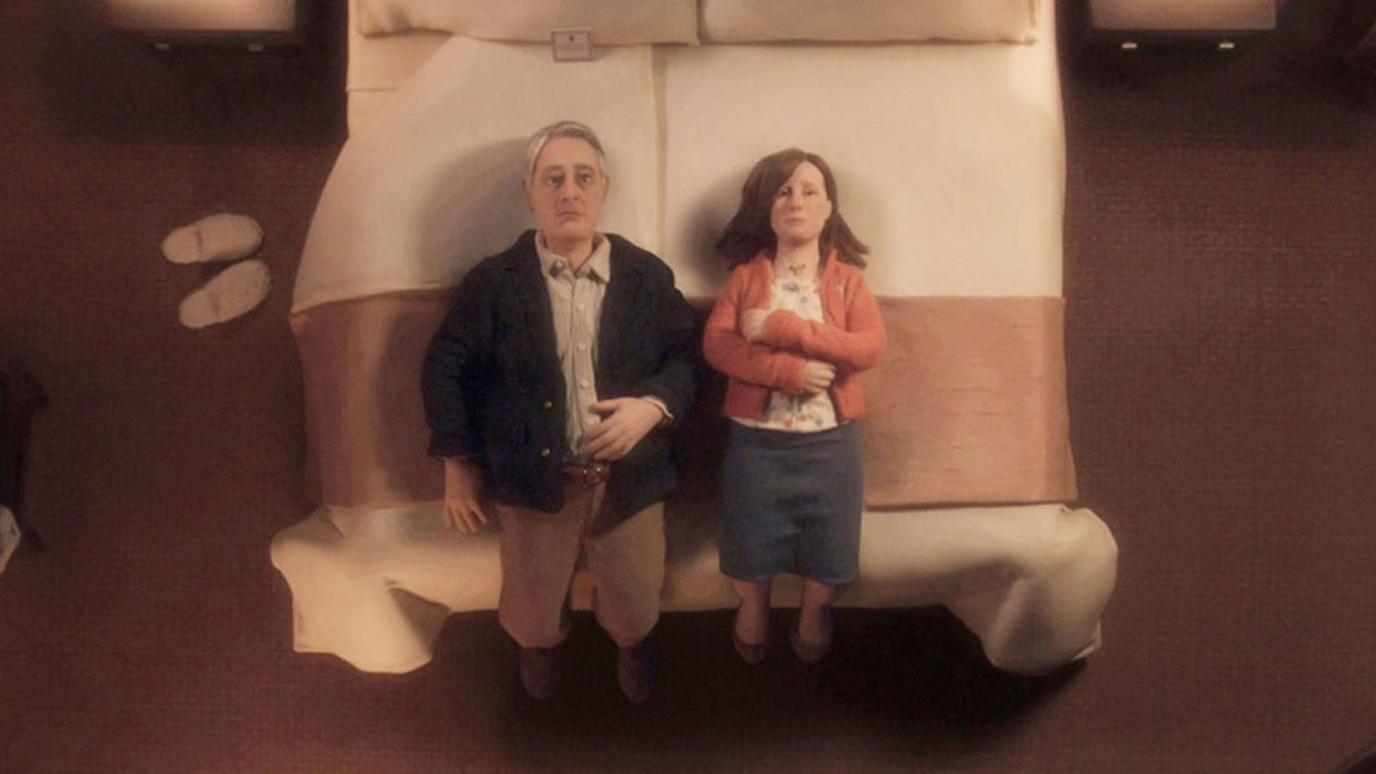
a) Can you describe the mise-en-scene in this picture? How are the characters placed in the frame?
The characters are placed symmetrically in the center of a high-angle shot, creating emotional distance, while small asymmetrical details make the scene feel intimate and realistic.
Research Activity 3: Rebecca (Hitchcock, 1940)
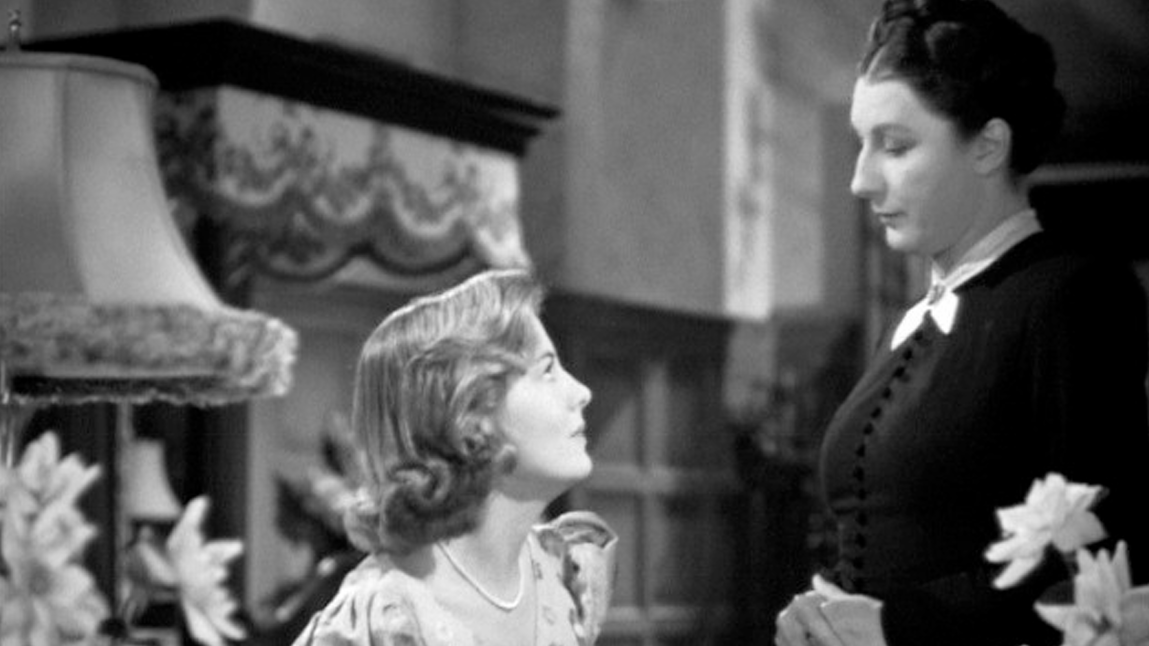
a) Can you describe the relationship between the characters?
The blonde woman appears insecure and powerless, while the woman in black clearly holds authority and control within the space.
b) How do we know what the relationship is?
Body language, hesitant movement, and nervous reactions from the blonde woman contrast with the calm, confident posture of the woman in black.
c) How does the mise-en-scène show this relationship?
Positioning, framing, and camera angles consistently place the woman in black in dominant visual positions, reinforcing the power imbalance.
Research Activity 4: The Breadwinner (Nora Twomey, 2017)
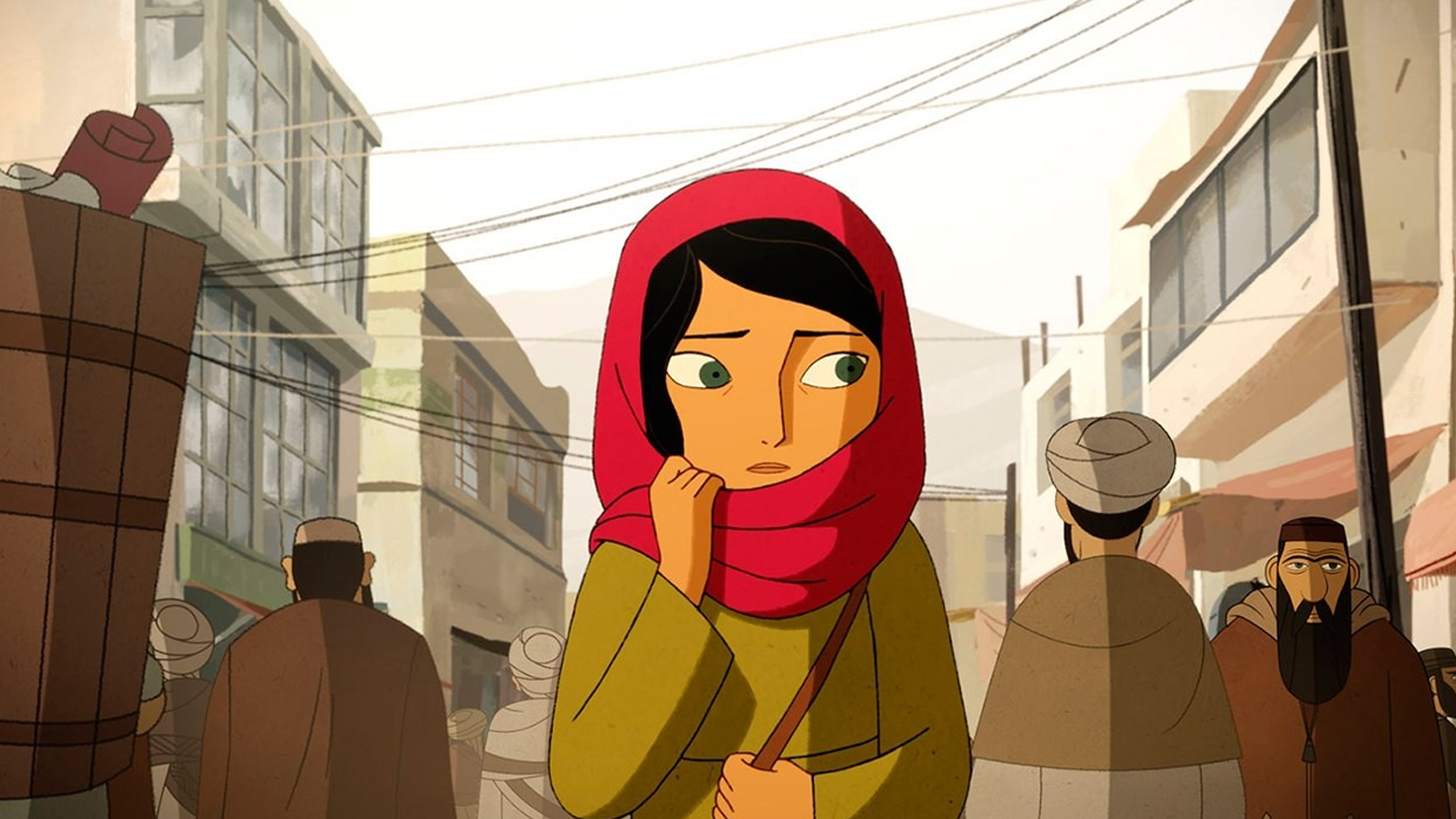
a) Can you describe the mise-en-scène in this picture?
A crowded street scene with muted colours places focus on a nervous woman wearing a red headscarf, emphasizing isolation and tension.
b) What type of shot is it?
Medium to medium close-up shot.
c) What is the camera angle?
Eye-level angle.
d) Where is the character located in the frame?
Centered in the frame.
e) What is she wearing?
A red headscarf and an olive-green outfit.
g) What is the depth-of-field?
Shallow depth-of-field, keeping the character in focus while softening the background.
h) Describe the colour palette.
Warm, low-saturation tones with red as the dominant accent colour.
i) Describe the lighting.
Soft natural lighting that creates a subdued and slightly oppressive atmosphere.