In Week 08, I started working on an advanced body mechanics shot, which was guided by both Professor George Toombes and Professor Ting Liu. The focus this week was to deeply understand what body mechanics actually means in animation. In the first session, George explained to me that body mechanics shots are about conveying believable movement through correct weight shift, foot placement, balance, posture, and timing. Unlike pose-to-pose animation, where I moved from one pose to another, body mechanics involves multiple poses connected together to form a complete, natural animation shot.
George explained that as an animator, it is my responsibility to make the mechanics feel convincing. He described body mechanics as the first layer of animation, where the priority is physical realism. Acting, emotion, and performance come later as additional layers. For this assignment, he specifically asked me to focus only on body mechanics and not worry about acting or storytelling. He also emphasized the importance of choosing a simple and readable reference, explaining that simple actions are often more effective and easier to animate than complex ones.
For the Week 08 assignment, I was asked to create a planning sheet instead of directly animating. This planning included line of action sketches, pose breakdowns, timing notes, frame counts, and camera or body angle considerations. George made it clear that only after the planning was approved could I move on to blocking. We were given two rig options, Ultimate Walker and Ultimate Bony, and I chose Ultimate Bony because it felt closer to realistic human proportions.
Step 1: Choosing the Reference
For my initial reference, I chose a cricket shot of Rohit Sharma hitting a ball in the nets. I studied the movement, sketched key poses over the reference, and tested rough timing.
Step 2: Planning the Shot
a) Paper Planning
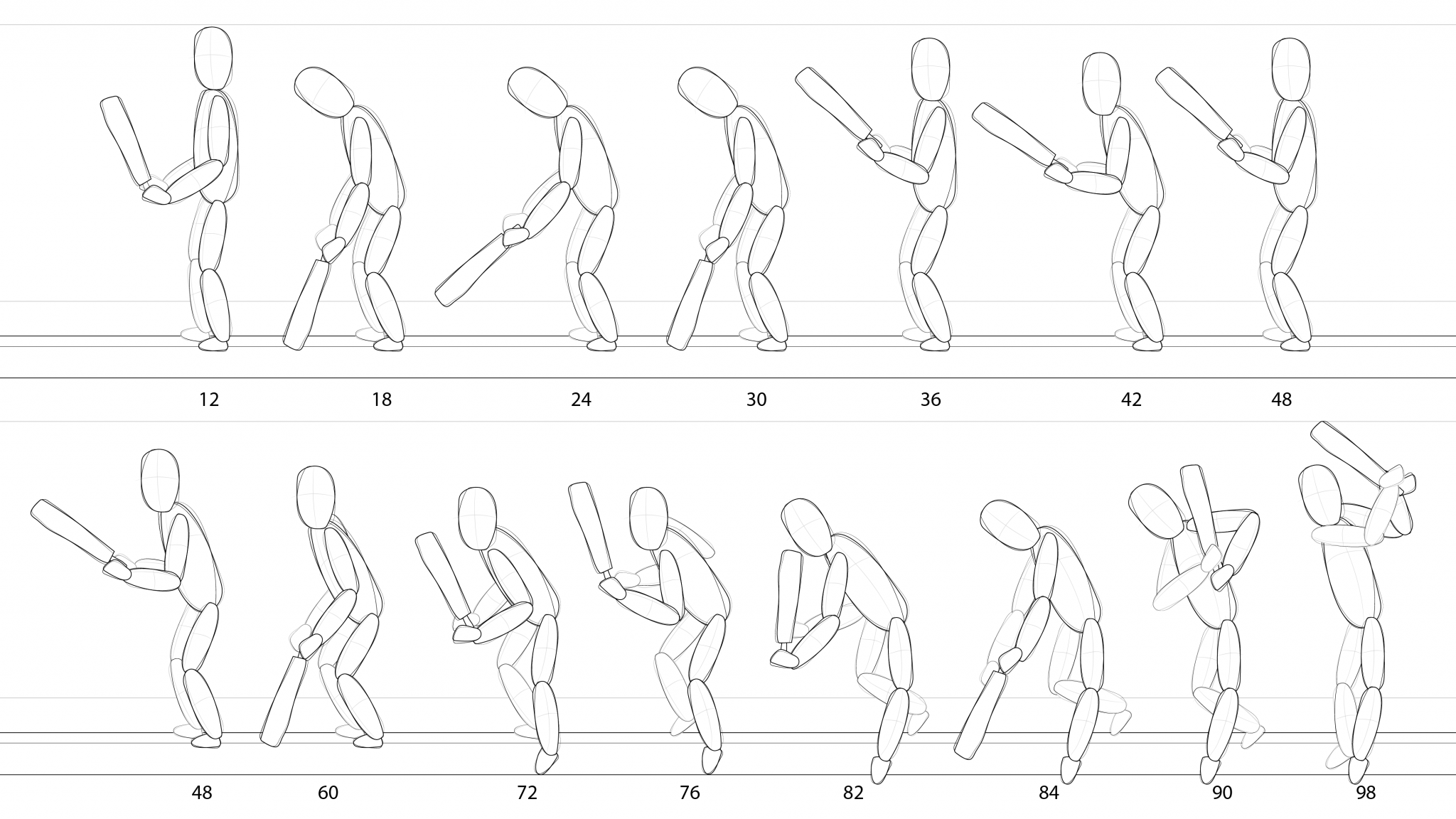
b) Video Sequence Planning
Step 3: Receiving the Feedback
After submitting this planning, George gave me strong feedback
“The reference is good, but the time frame you’re working in will be very challenging to animate.”
“Using two hands makes the mechanics much more complex, especially at this stage.”
“Choose a simpler reference that is easier to read and animate.”
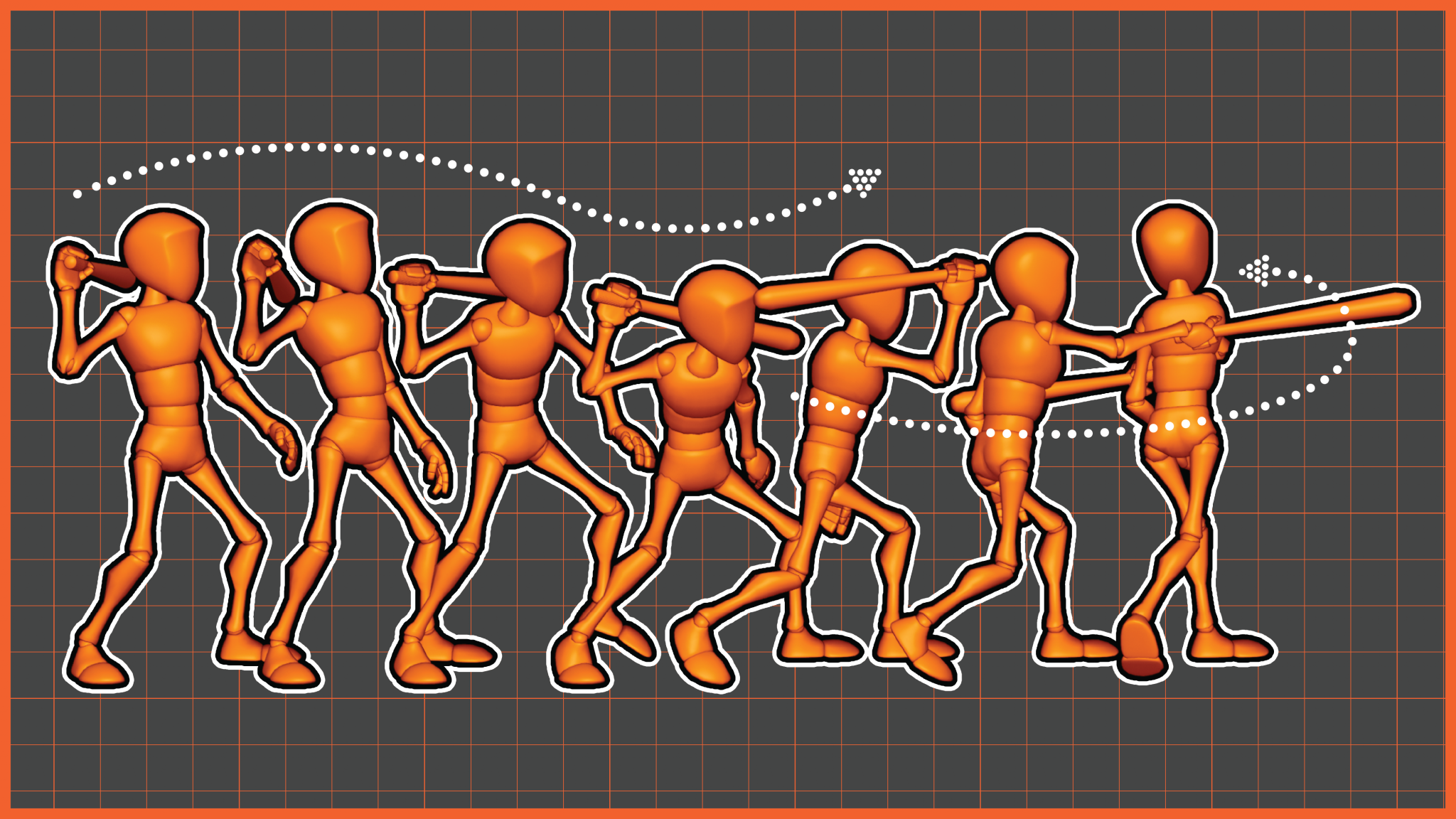
A one-handed baseball bat swing would be a better option for body mechanics practice.”
This week’s session strengthened my understanding of Pose to Pose animation and the value of using references to guide motion. It also reminded me that exaggeration and clarity must go hand in hand, and simplifying complex movements can make the animation more impactful. By applying these principles, I feel my work is becoming more polished and closer to a professional standard.
Step 4: Revising the Reference
Based on this feedback, I selected the new baseball reference and restarted my planning, creating fresh sketches and timing tests. This week helped me understand how crucial planning and reference selection are before even starting animation.
Step 5: Planning the Shot