
In Week 06 of Computer Animation Fundamentals, Professor George Toombes introduced me to the concept of a Vanilla Walk Cycle. He explained that this is the most fundamental form of a walk cycle, where the character walks from left to right in a clean, continuous loop using the Ultimate Walker rig. This exercise was meant to help me understand the core mechanics of walking before adding any stylization or personality. George explained that:
“Walks are a window into who we are, and that a simple walk can communicate a lot about a character’s personality, mood, and physicality.”
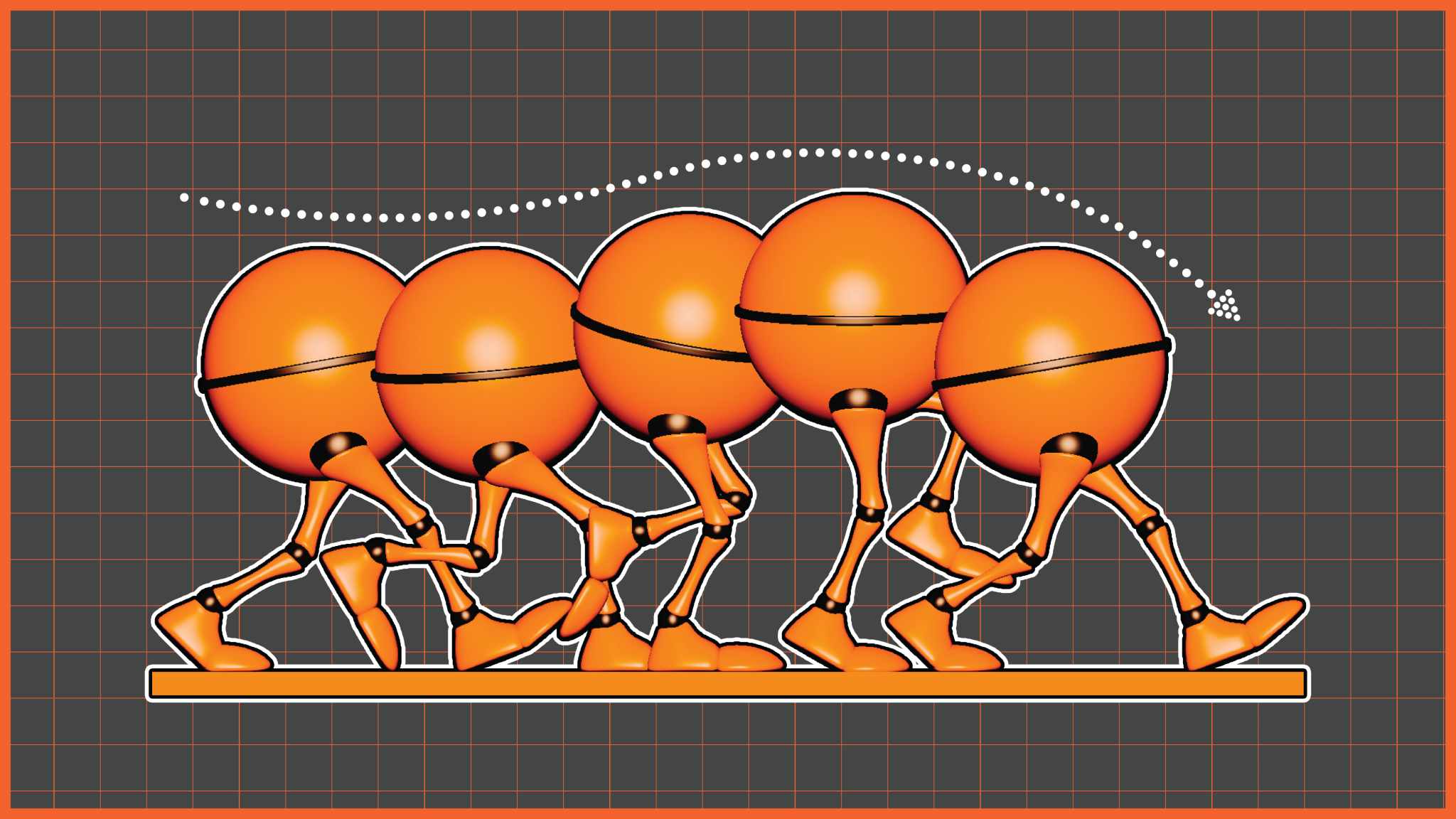
He broke down what actually defines a walk cycle by explaining the importance of key poses, breakdowns, and extremes. The key poses in a walk are the contact poses, where the feet touch the ground. The breakdown poses are the passing positions that sit between these contacts, helping connect the motion smoothly. The extremes represent the highest and lowest points of the walk, which give the motion its rhythm and weight Alongside the walk cycle, we were also given a few static human poses to study and recreate, which helped reinforce my understanding of balance, posture, and weight distribution. George emphasized that even in a vanilla walk, the movement should feel grounded and believable, not mechanical.
For the Week 06 assignment, I was asked to create a full Walk cycle Blocking using the Ultimate Walker rig, making sure the walk looped smoothly and followed proper walk mechanics.
Step 1: Choosing the Reference
Step 2: Composing the Blocking Animation
a) Walk Cycle Side view
b) Walk Cycle Front view
Step 3: Receiving the Feedback
After submitting my animation, I received detailed feedback from Professor George that:
“The timing is good, but in some steps the character is lagging behind and the legs are skidding, which should not happen.”
“Make sure the highs and lows are subtle. Exaggeration is important, but it shouldn’t feel overdone or distracting.”
“From the front view, the motion should feel like a bouncing ball—back and forth, left to right—because the hip movement follows a similar principle.”