In Week 07 of 3D Computer Animation Fundamentals with Professor Ting Liu, the main focus was on hand poses and hand gestures in animation. She explained to me how hands play a crucial role in defining a character’s personality, emotions, and overall attitude. I learned that hands are not just functional but are also a powerful tool for expressing feelings, intentions, and even internal thoughts. Hands can act as a form of secondary animation, subtly reinforcing emotions or supporting the character’s interaction with objects, props, and the surrounding environment.
Professor Ting broke down hand animation into several key principles from an animation perspective. One of the most important aspects she explained was shape, as the silhouette of a hand can strongly affect how readable and expressive it appears. Asymmetrical and organic shapes can convey complexity, effort, or emotion, while simpler hand shapes can communicate calmness or control. I understood that choosing the right hand shape directly impacts the tone and clarity of an animation. She then explained the idea of organic hands, highlighting the difference between stiff, robotic hands and natural, believable ones. Organic hands are never perfectly aligned; fingers move freely and naturally, with slight variations that make them feel alive. Another important concept was the leading finger, where one finger initiates the motion and the others follow with a slight delay. This follow-through creates a more expressive and natural movement.
The next principle was grouping, especially during interactions with objects. Fingers tend to rest against each other rather than spread evenly, and grouping helps simplify the pose while maintaining realism. Professor Ting emphasized that fingers are generally lazy and prefer to move together unless a specific action requires separation. She also suggested several references for studying hands, including films like Tarzan, classical hand drawings, animation studies, and most importantly, my own hands, which she encouraged me to observe and use as a primary reference.
For this week’s assignment, I created a set of hand poses.
A) PLAYING FLUTE
Step 1: Developing the hand Pose
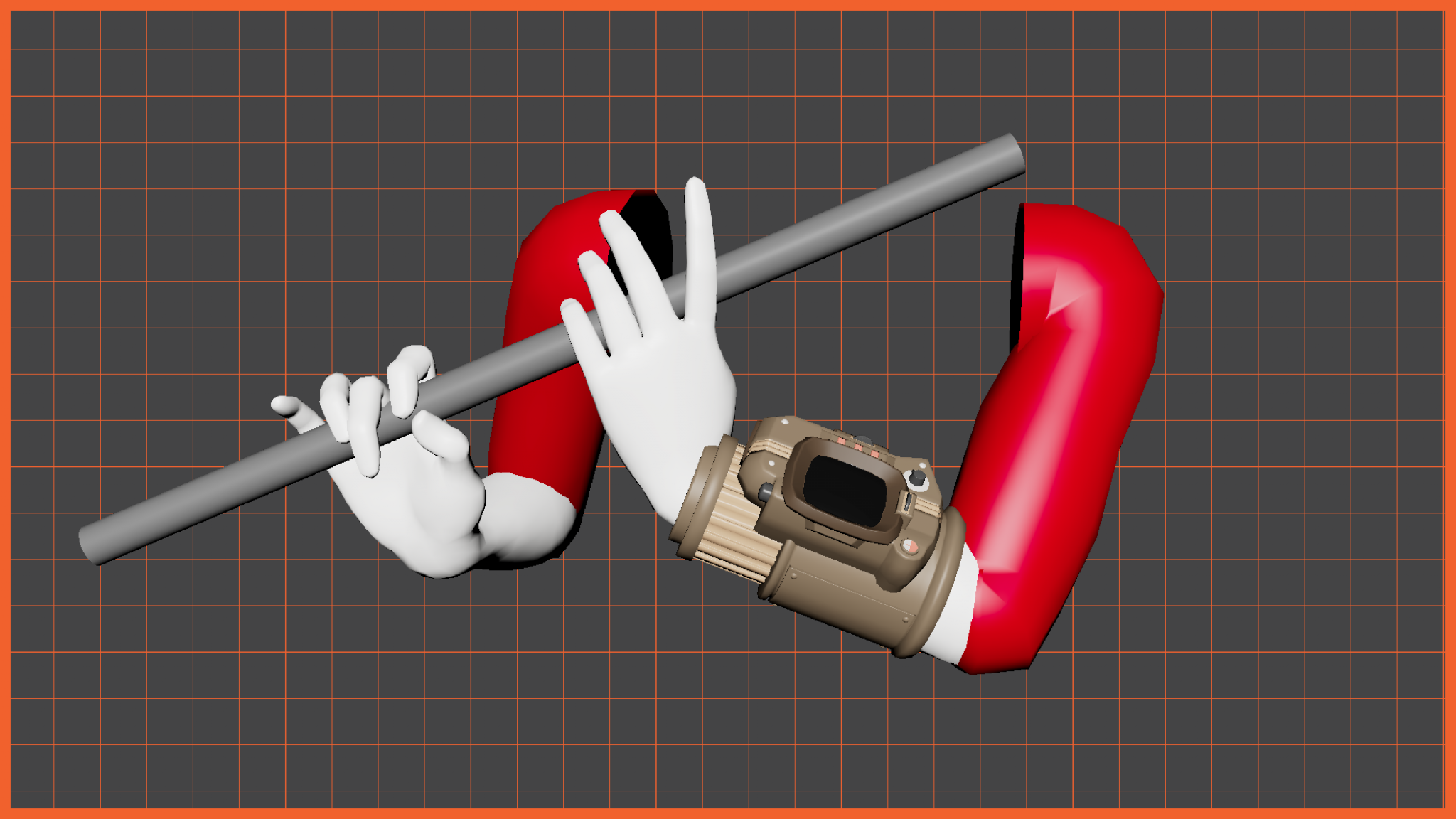
Step 2: Rendering the Pose in 360 Degree
B) PRESSING BUTTON
Step 1: Developing the hand Pose
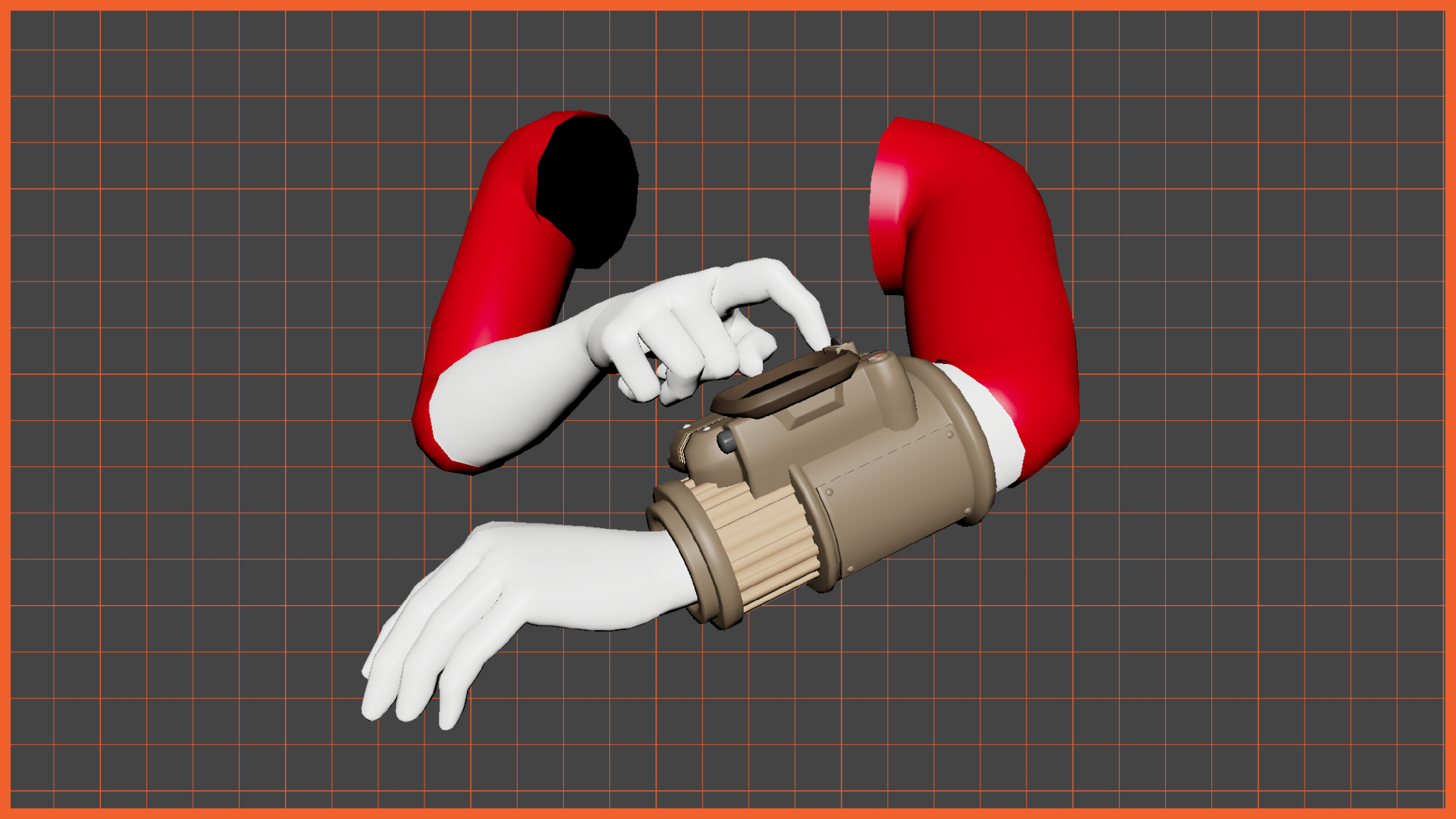
Step 2: Rendering the Pose in 360 Degree
Step 3: Receiving the Feedback
After reviewing my work, Professor Ting said,
“The hand poses are strong and well observed.”
“For the next iteration, instead of presenting the hand poses in a 360-degree turn, I want you to record references of your own hands and build the poses directly from that.”
This feedback helped me understand the importance of grounding hand animation in real-life reference to achieve greater authenticity and precision.
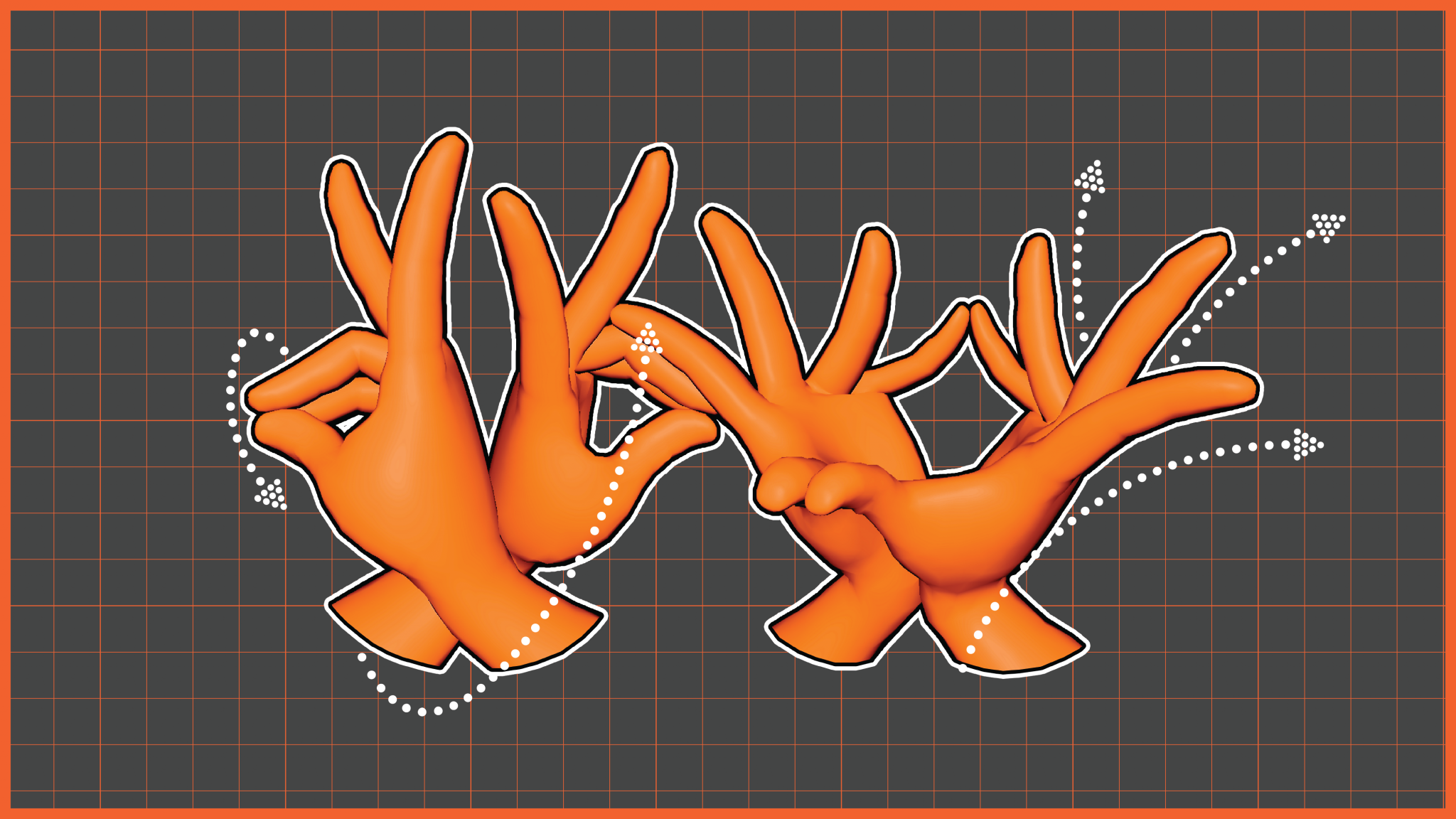
A) LOTUS BLOOM
Step 1: Choosing the Reference and Developing the Hand Pose
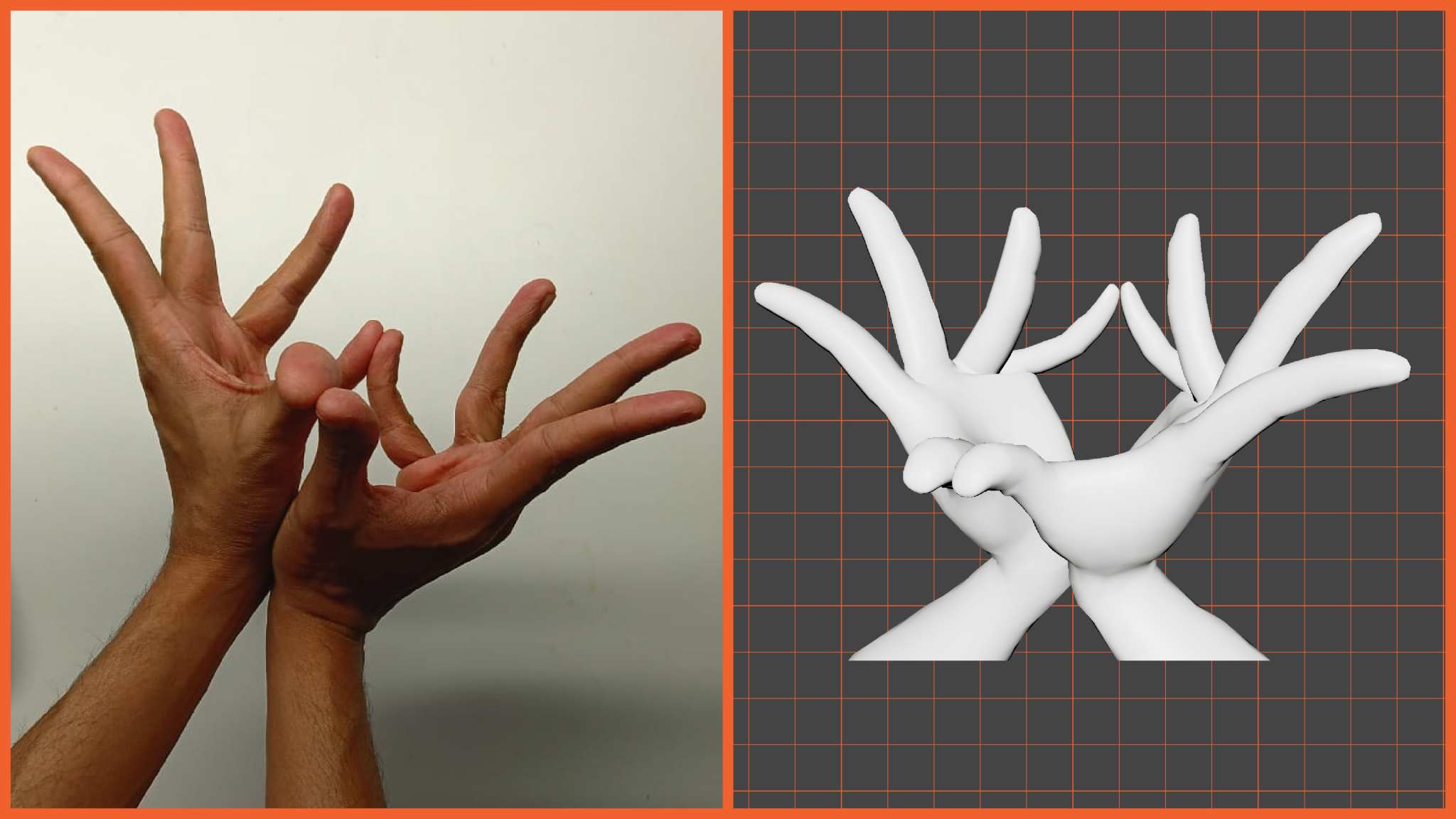
Step 2: Rendering the Pose
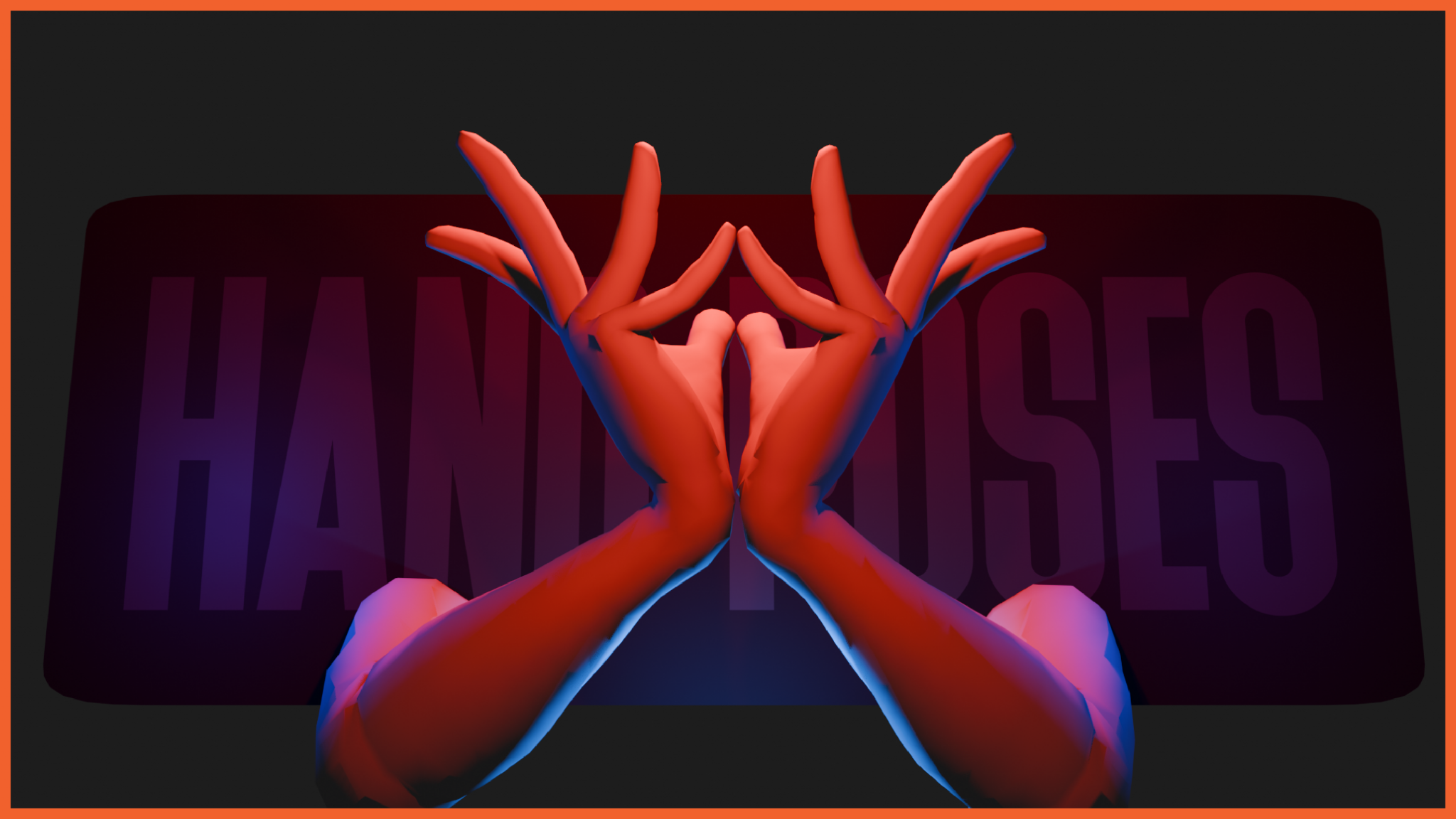
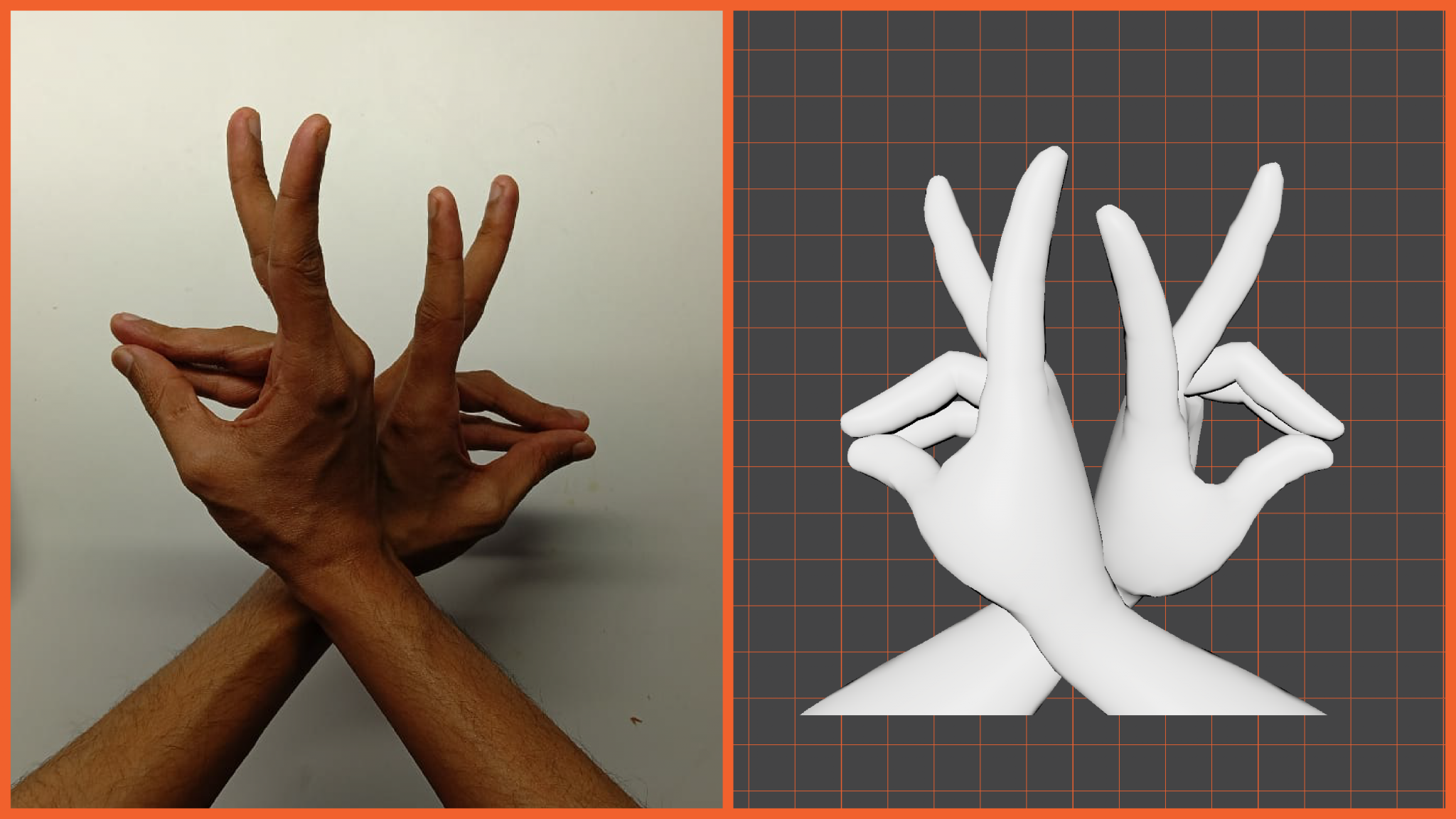
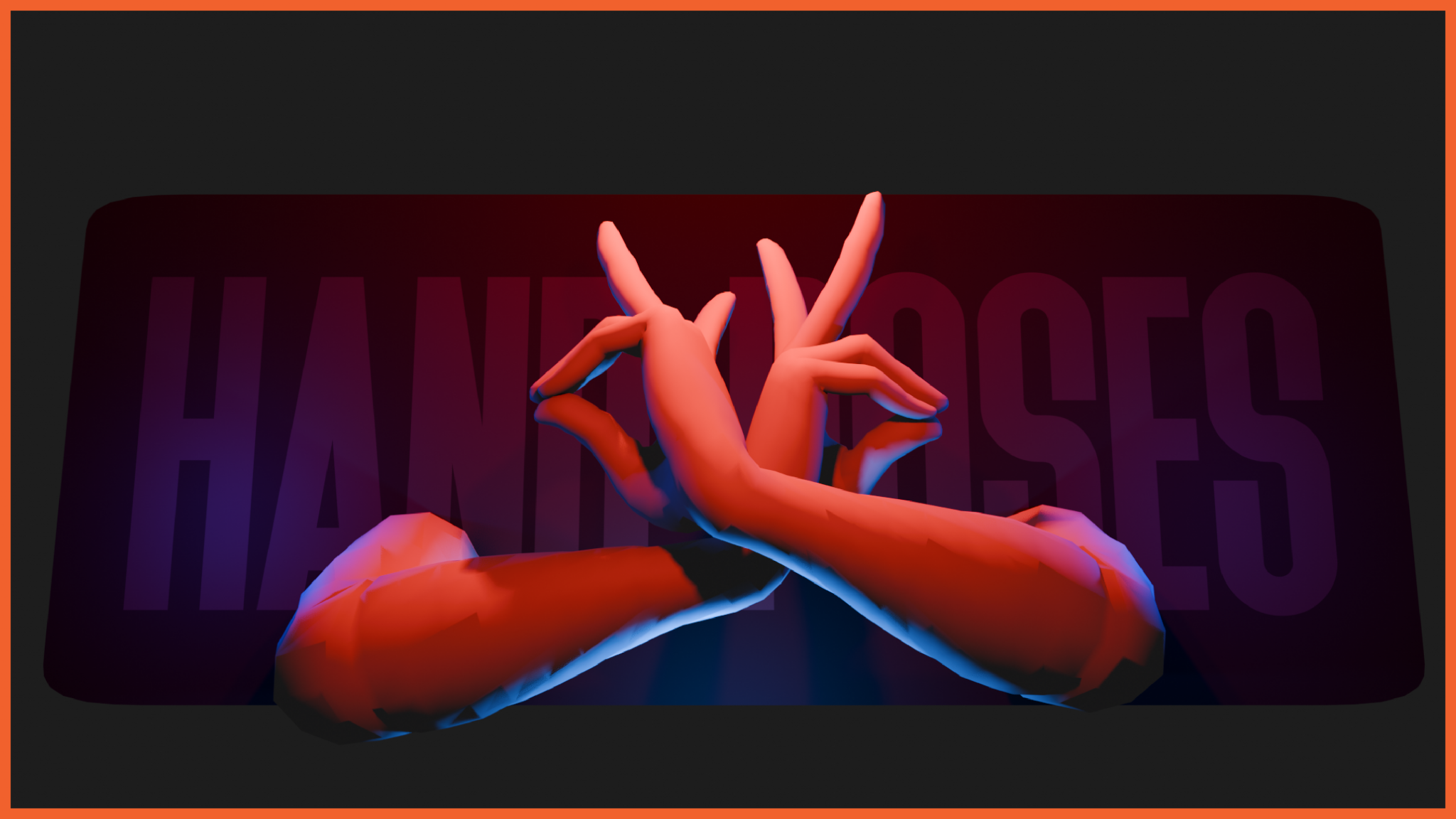
B) MAGIC SPELL
Step 1: Choosing the Reference and Developing the Hand Pose
Step 2: Rendering the Pose
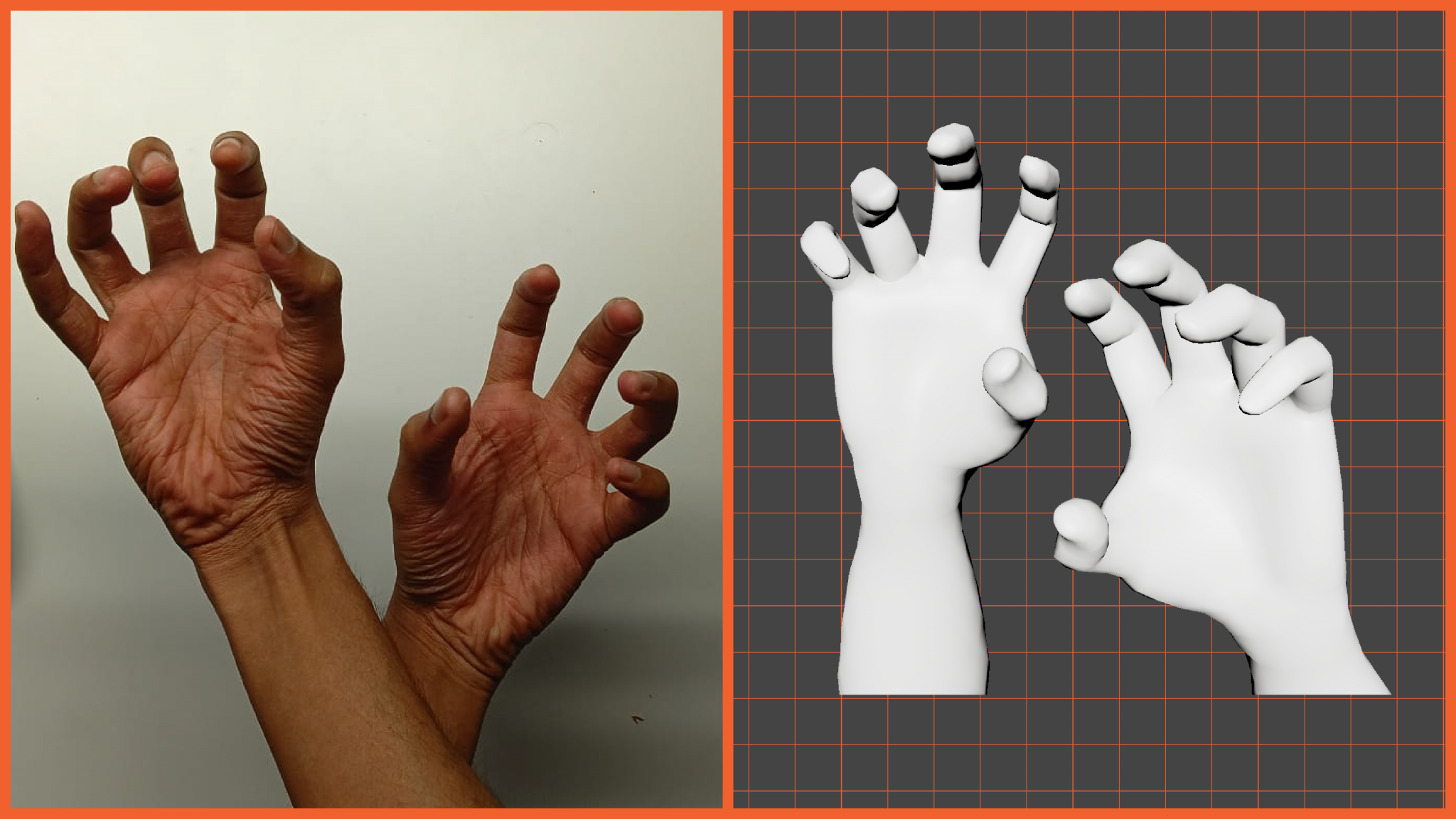
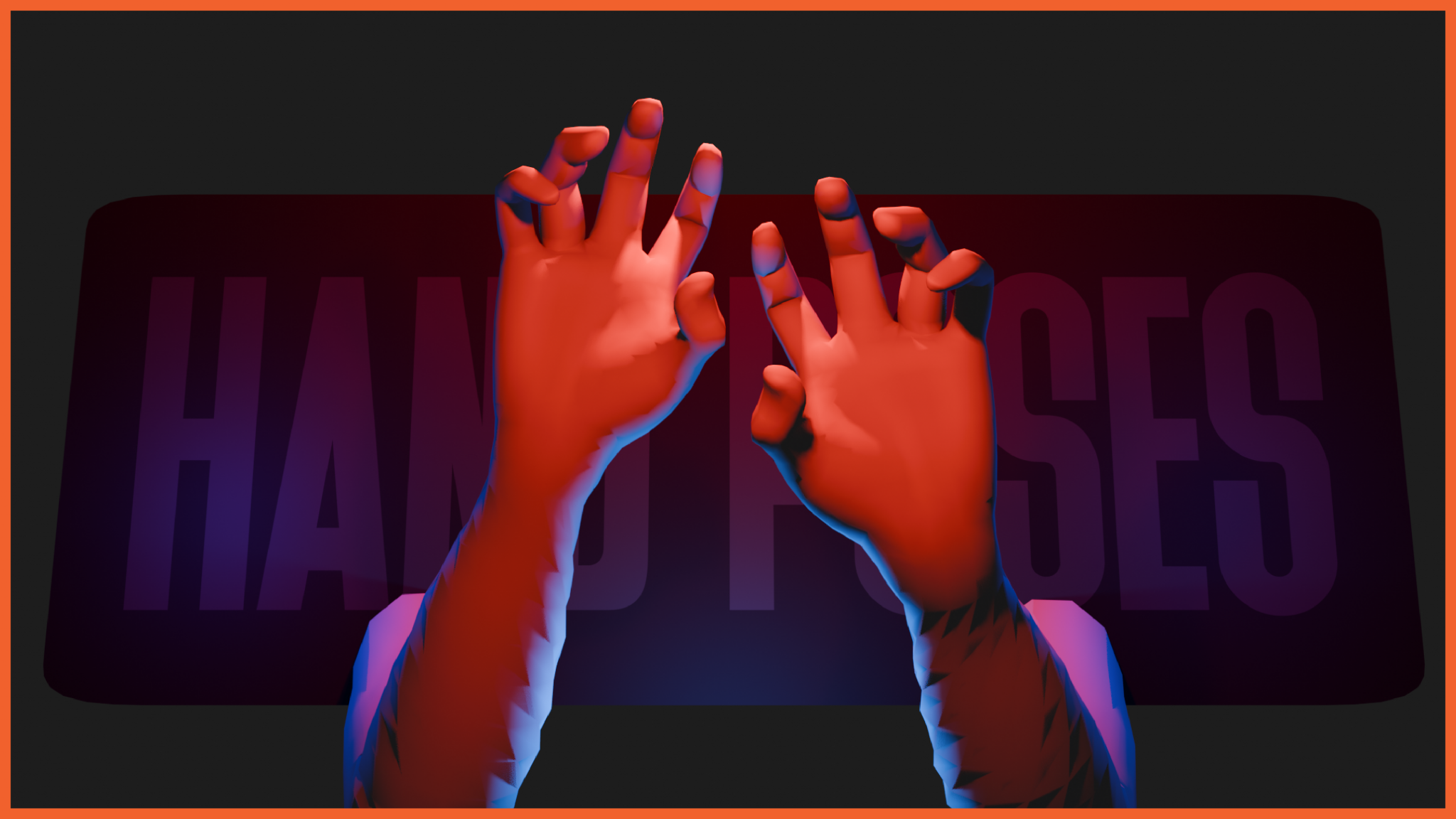
C) SCARY WRIST
Step 1: Choosing the Reference and Developing the Hand Pose
Step 2: Rendering the Pose
D) FREIND’S LOCK
Step 1: Choosing the Reference and Developing the Hand Pose
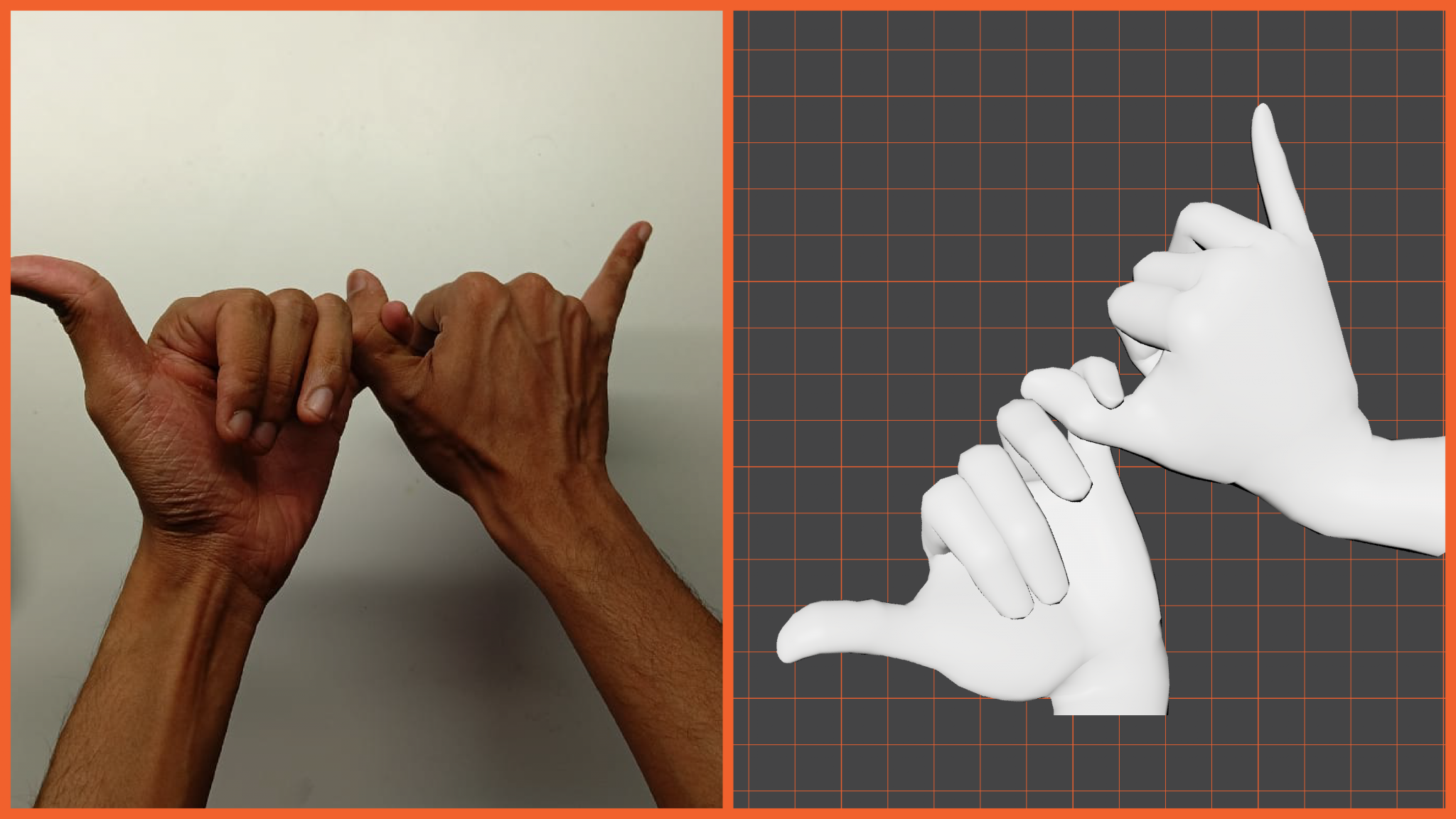
Step 2: Rendering the Pose
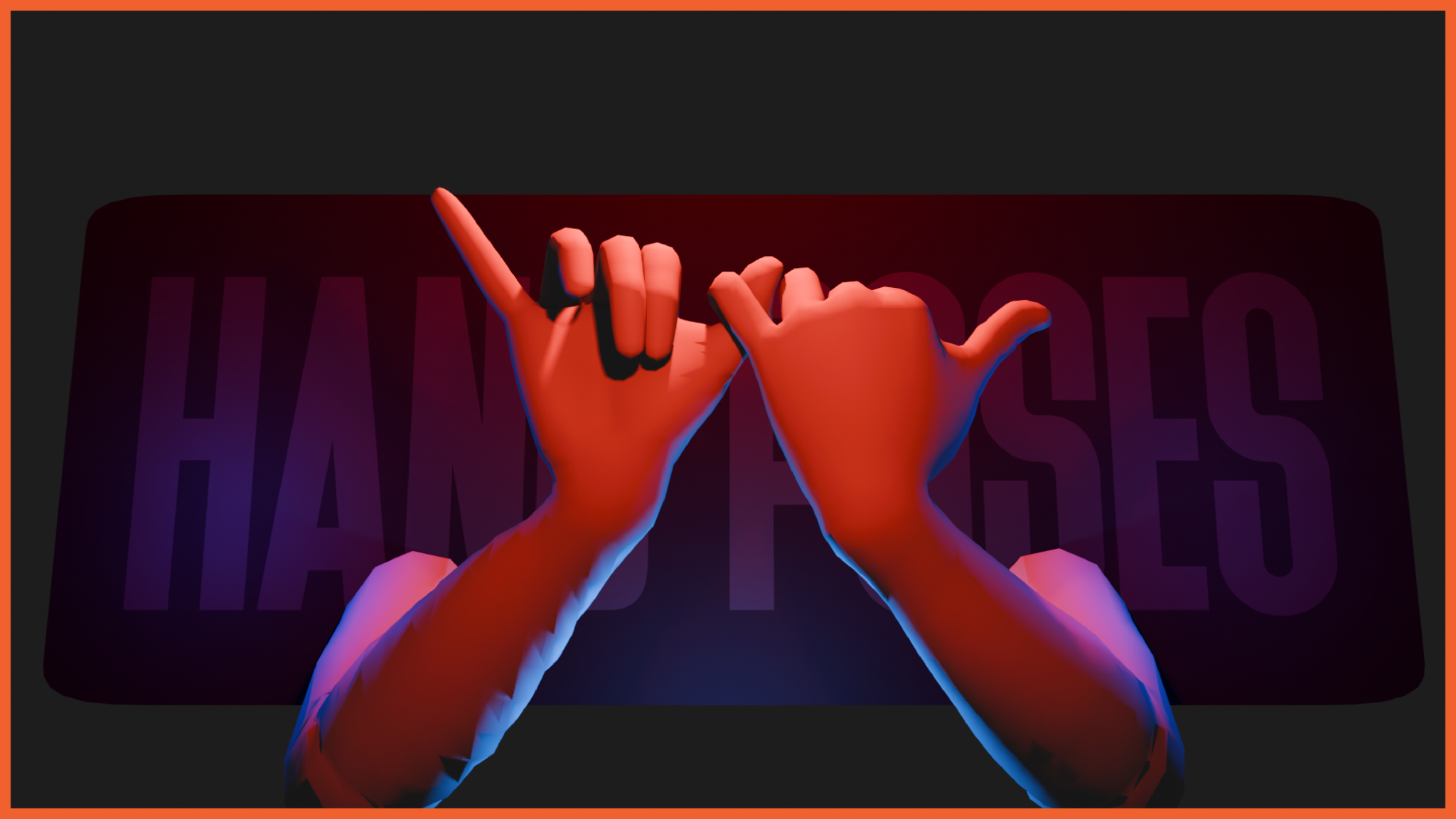
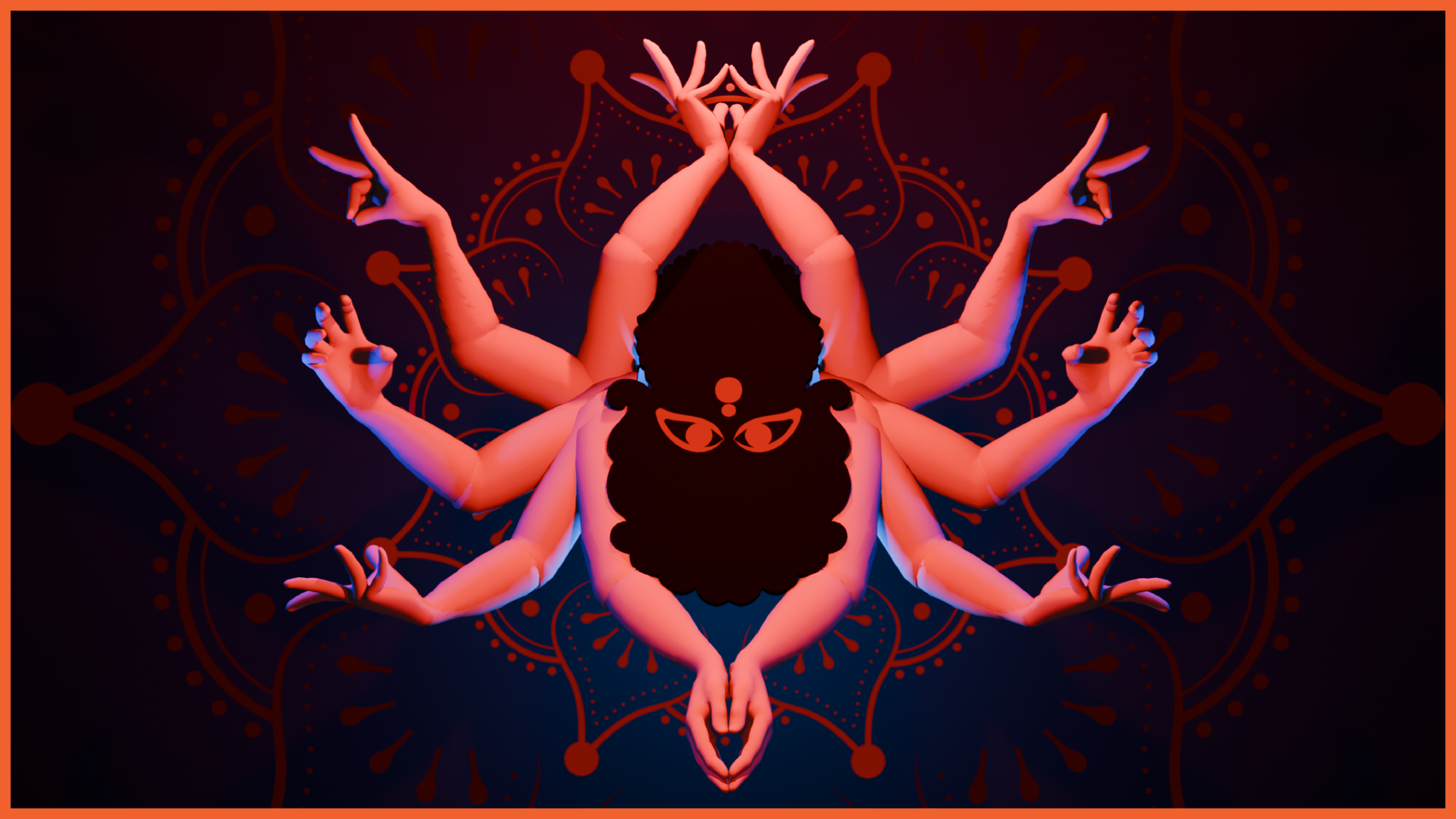
Step 3: Abstract Composition of all the Hand Poses