
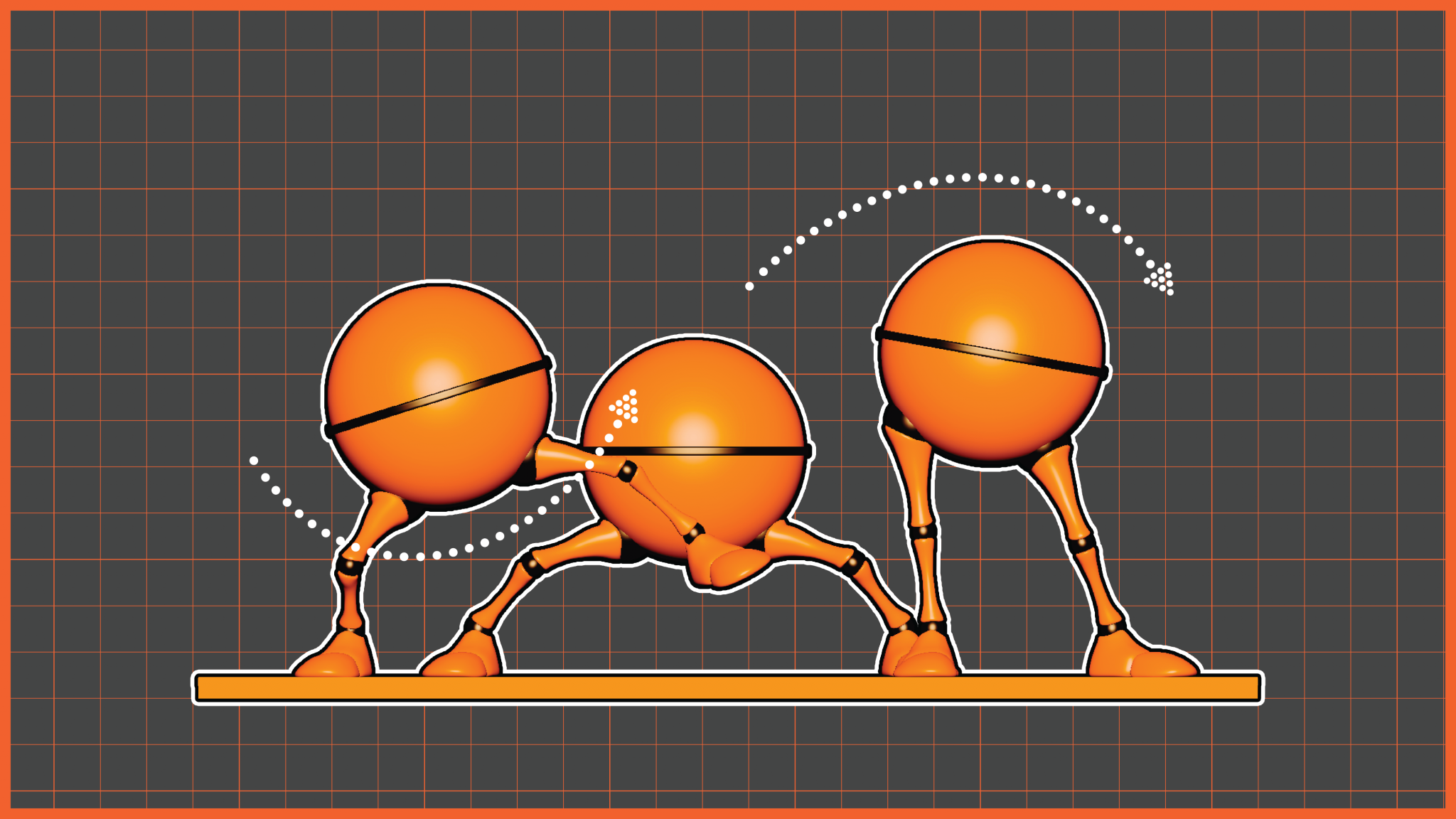
In Week 05 of Computer Animation Fundamentals, Professor George Toombes introduced me to the concept of weight shift in animation. He explained that:
“No two people walk the same way, and because of this, a walk cycle should never feel generic. Each walk needs personality, and the best way to achieve that is by observing and replicating my own body movement.”
To support this idea, he asked me to record my own walking reference and study how my weight transfers from one leg to the other. Based on this guidance, I recorded a reference of myself walking and carefully observed details such as my step length, hip movement, and how my body naturally leans during motion. I then used the Ultimate Walker rig to translate this reference into animation. Before animating, I followed the workflow, starting with reference, then rough planning and posing, and finally moving into the animation phase. This structured approach helped me stay focused and intentional with each decision.
Step 1: Recording the Reference and Planning
Step 2: Composing the Animation
a) Weight Shift Front view
b) Weight Shift Side view
Step 3: Receiving the Feedback
After submitting my animation, I received detailed feedback from Professor George that:
“The animation is good, but because you are using a longer step, the weight shift needs to start from a more natural stance instead of a straight pose.”
“I like the timing, but you need to shape the layers more and smoothen the animation.”
Step 3: Recomposing the Animation
Based on the feedback I received, I corrected the Weight Shift and used the graph editor to smooth out the Animation.
a) Weight Shift Front view
b) Weight Shift Side view
This week helped me understand how important weight distribution and stance are in character animation. Studying my own movement made the process more personal and insightful, and the feedback clarified how small adjustments in posture and smoothing can greatly improve realism.