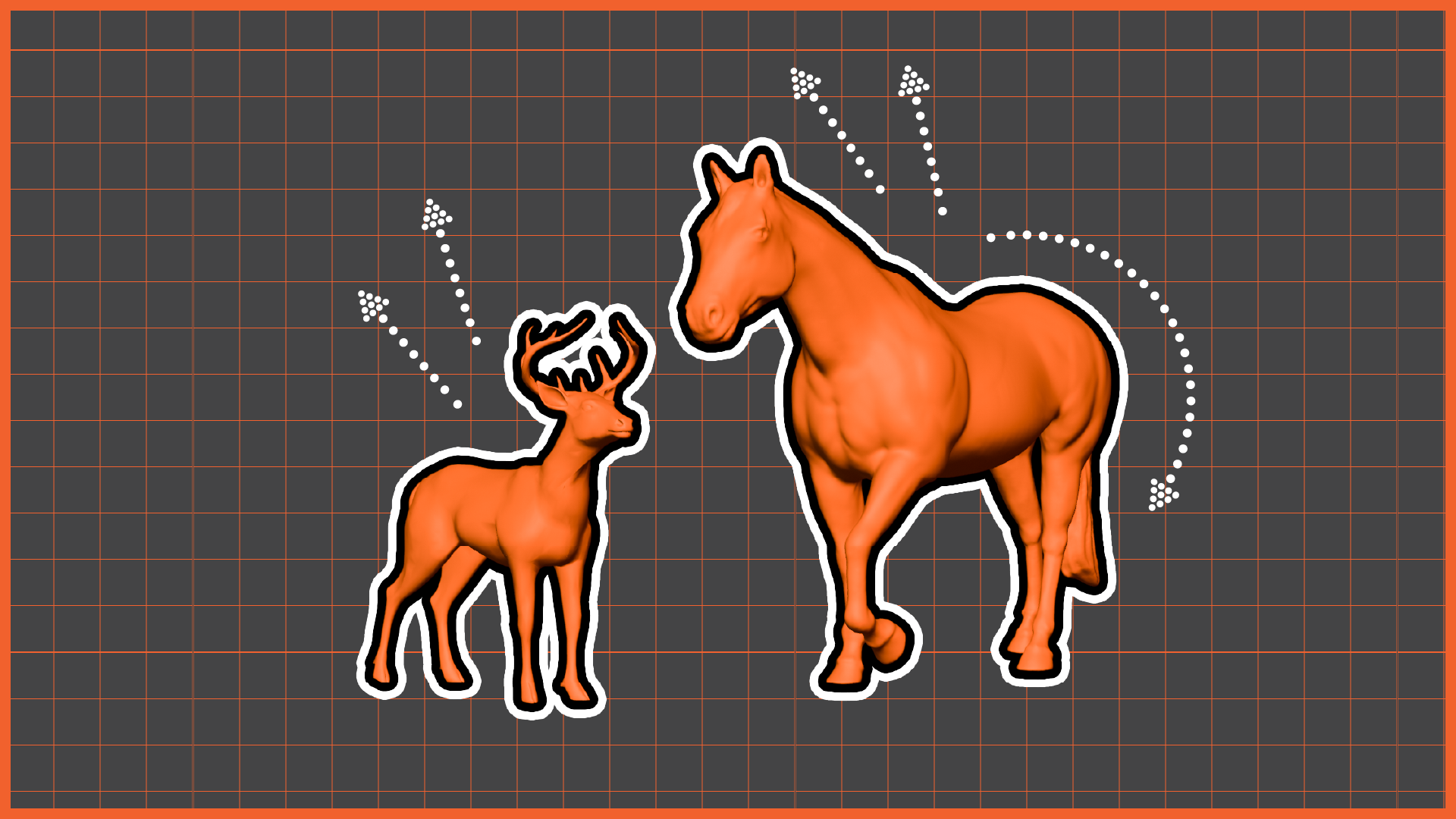
In Week 13 of Advanced 3D Computer Animation, Professor Ting Liu introduced creature studies and animal animation. The session focused on understanding how different animals move, communicate, and express behaviour through body language. She explained the importance of observing real-world movement before animating creatures and demonstrated how factors such as anatomy, weight distribution, gait patterns, overlapping action, and balance influence believable animal animation. We studied various categories of animals including fish, dogs, cats, bears, elephants, horses, and deer, examining how each species moves differently and how animators adapt those movements for screen. Then Ting divided the class into groups of three and assigned each group an animal category.
Step 1: Choosing the Creature Category
I worked with Ben and Seiya, and our group selected Horses and Deer I researched their movement patterns and prepared a presentation analysing their behaviour and locomotion.
Step 2: Presenting the Creature Study
I explained different horse and deer gaits:
a) Walk Gait
b) Trot Gait
c) Canter Gait
d) Gallop Gait
Including how transitions occur between them. I discussed the challenges of animating these transitions, particularly the changing lead legs, shifting weight distribution, spine curvature, turning mechanics, and overall balance. I also explored facial behaviour, eye expressions, ear positioning, and how these elements communicate emotion and intention. As part of our presentation, I included examples from animated films, including Maximus from The movie Tangled, to demonstrate how animators stylise horse behaviour while maintaining believable movement.
To make the presentation more engaging, I designed the slides using AI-generated visuals and created stylised digital avatars representing myself, Ben and Seiya. The characters were designed in a soft 3D animation style that matched the overall presentation aesthetic. Rather than using standard presentation graphics, I wanted the visual design to feel closer to an animated production pitch.
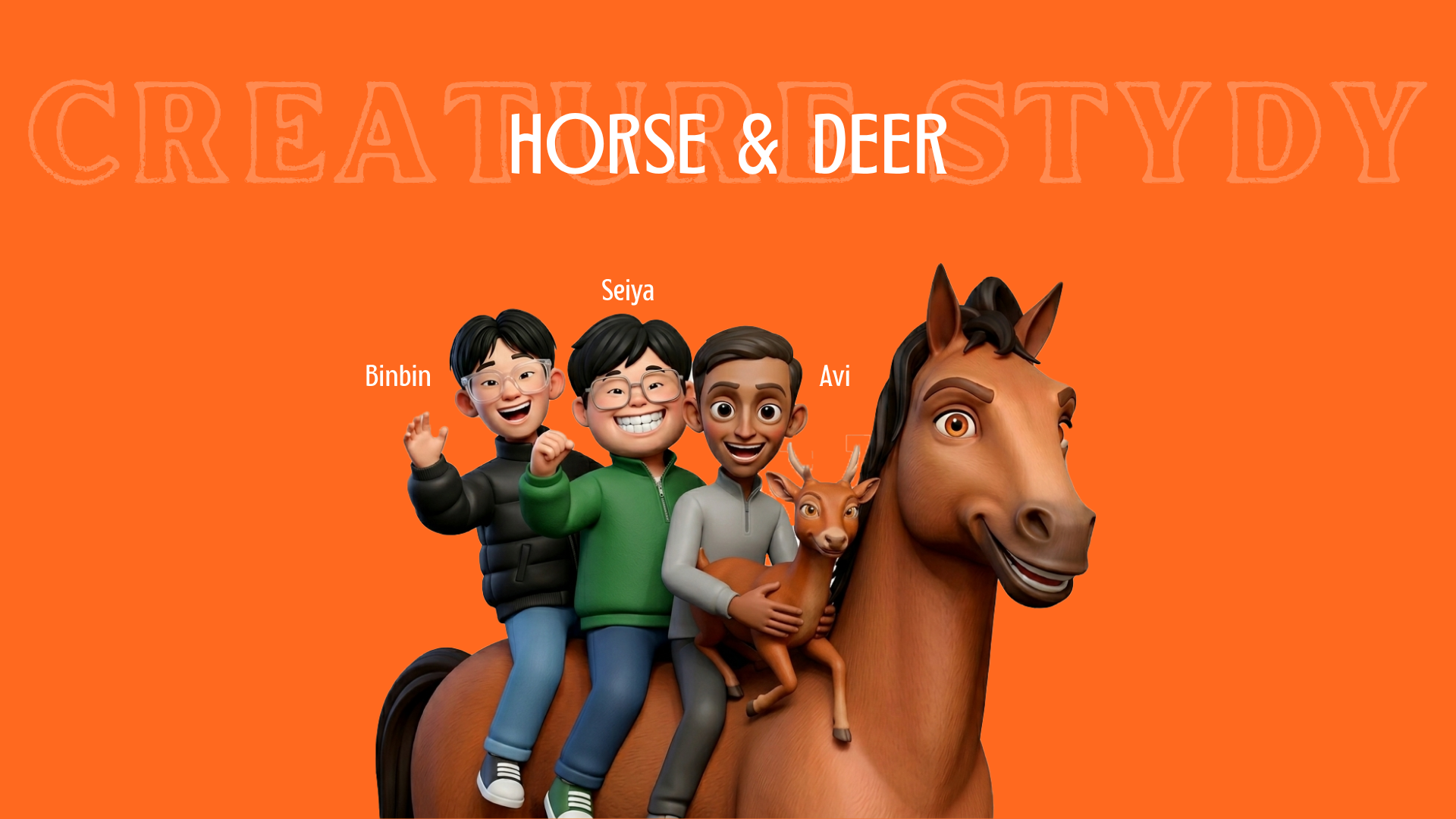
The class responded positively to this approach, and students appreciated the presentation’s visual quality and consistency. The use of custom character designs helped make the research more memorable and demonstrated how presentation design can support communication of ideas. The positive response encouraged me to continue integrating visual storytelling and design thinking into future presentations and animation projects.
Step 3: Receiving the feedback
After presentating, I received encouraging feedback from Professor Ting that:
“The gait graphs and movement analysis help explain the mechanics clearly and make the presentation easier to understand.”
This activity helped me understand that successful creature animation requires much more than copying movement. I learned how anatomy, rhythm, weight transfer, and behavioural observation work together to create convincing performances. Researching horses and deer improved my ability to analyse movement systematically, and I gained a deeper appreciation for the amount of observation required before beginning creature animation.