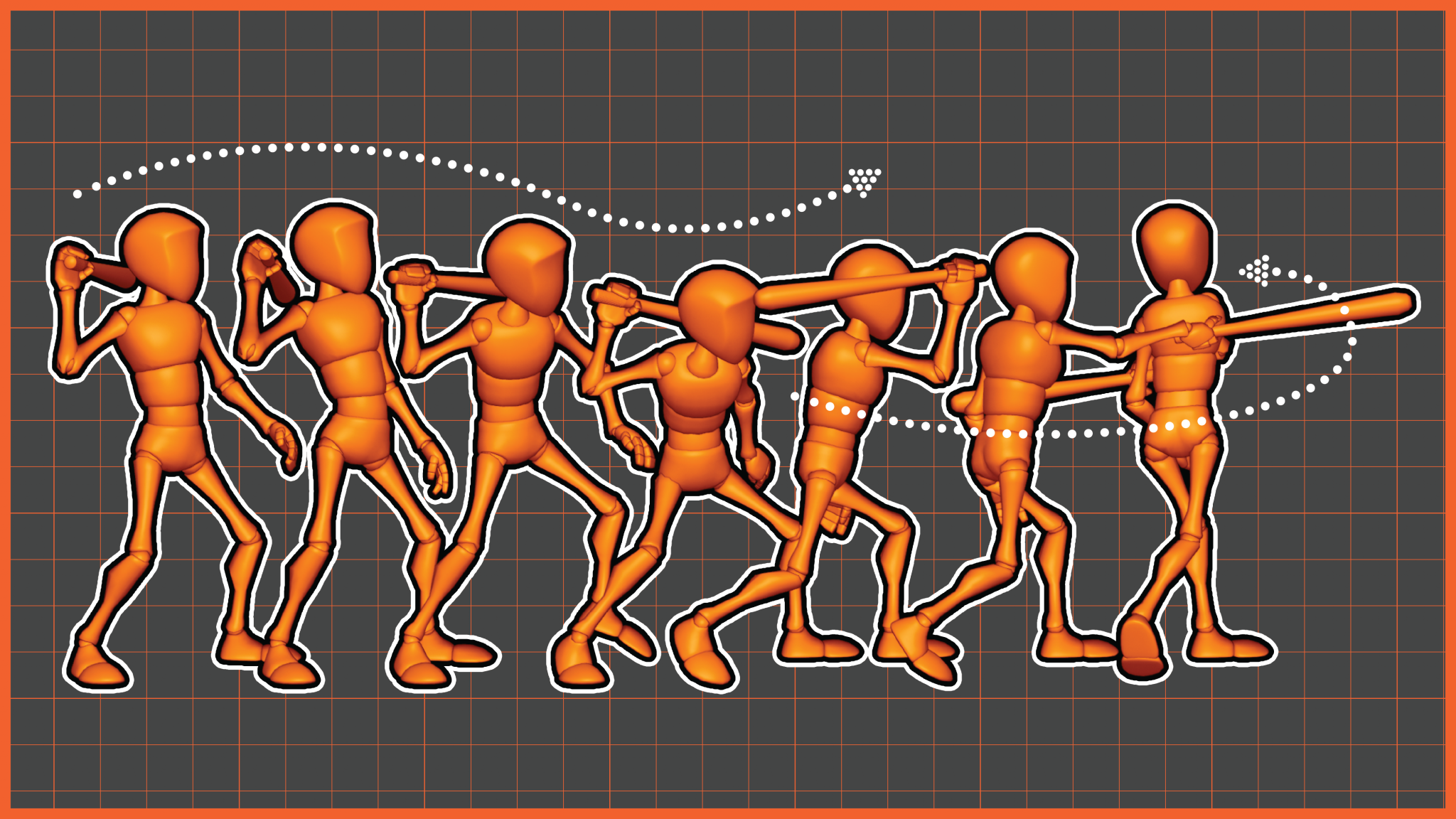
In Week 09, Professor Ting Liu started reviewing my body mechanics work. Based on George’s feedback from the previous week, I updated my reference and replanned the shot before moving into animation. Using the new, simpler reference, I began creating the blocking stage of the animation. I worked frame by frame, focusing on placing the key poses accurately while slightly exaggerating the line of action to make the movement clearer and more readable.
Step 1: Composing the Blocking Stage
Since my animation involved swinging an object, I also added a constraint to properly connect the object with the character’s hand. This helped the interaction feel more believable and mechanically correct. I carefully placed the key poses by matching them with the reference, ensuring the timing and posture reflected the real movement while still keeping it animation-friendly.
Step 2: Comparing with the Planning
Step 3: Receiving the Feedback
After submitting this planning, Ting gave me strong feedback
“This reference is much clearer, and it’s easier to understand the movement from different angles.”
“Using a side view will give you a better read of the body posture compared to the front view.”
“Since this is the starting stage of body mechanics, first focus on the hand movement, then build the bat swing around it.”
Step 4: Recomposing the Animation
Based on this feedback, I adjusted my approach and started refining the blocking by prioritizing the hand movement before fully developing the swing.
a) Body Mechanics Side view
b) Body Mechanics Front view
Step 5: Receiving the Feedback
After submitting this animation, Ting gave me encouraging feedback
“Animation is improved, but we can further simplify the Key poses with more C-shaped Line of Actions and avoiding S-shapes”
“Bat Swing speed should be more faster so that it can look more impactful”
This week helped me understand how crucial clear reference, correct viewing angles, and adding more key poses do in a body mechanics shot.