

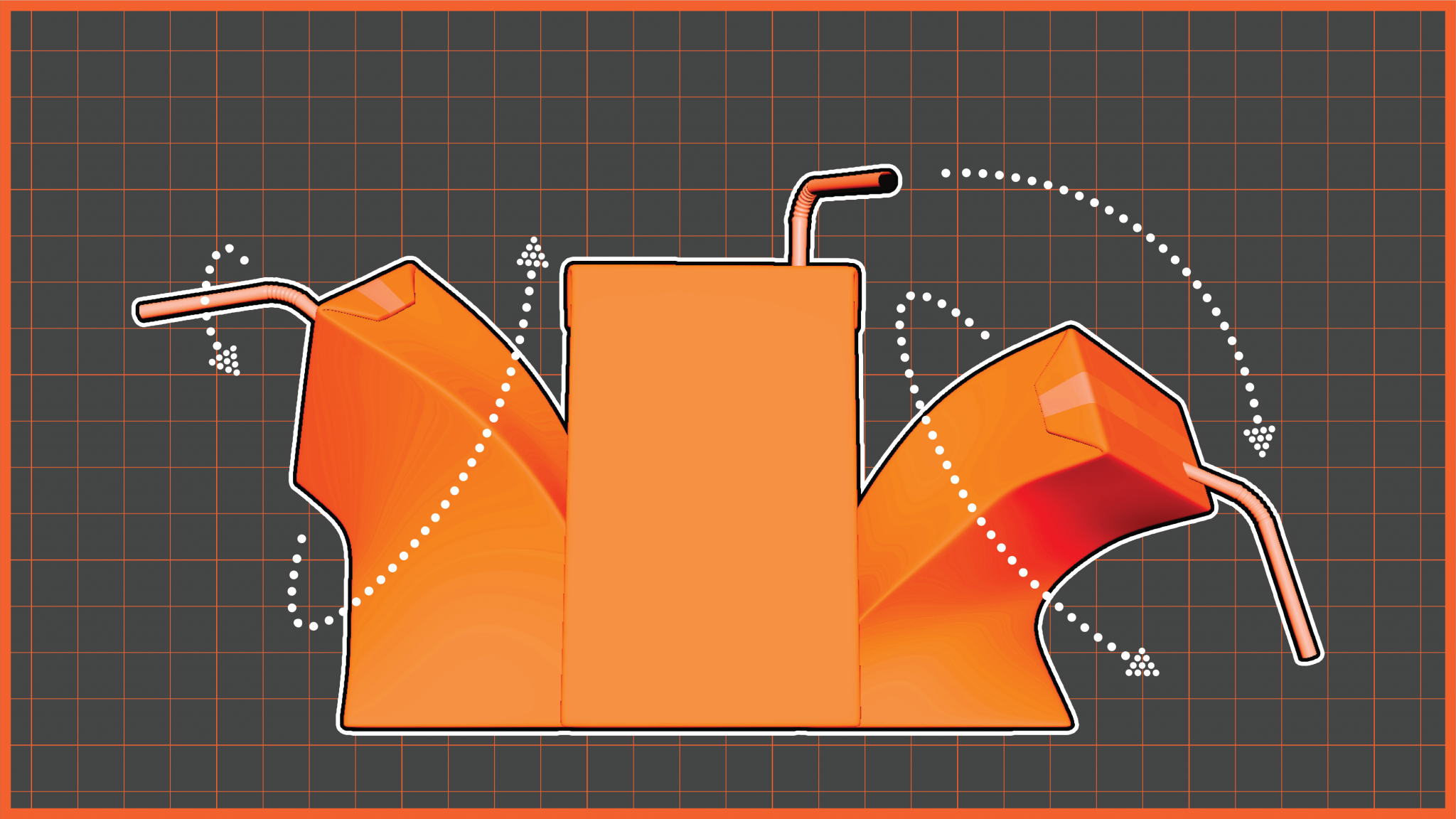
In WEEK 04 of Computer Animation Fundamentals with Professor Ting Liu, I continued working on my Juicebox Acting Shot from the previous week. The main focus this time was on understanding how the basic principles of animation can help polish an acting scene and make it feel more believable.
Professor Ting explained to me the importance of Anticipation, Flexible movement, and Secondary Actions in adding life to an animation. She explained that in Juice box animation, even the straw attached to the box needed to be animated properly, as it could act as a secondary element that reacts naturally to the main motion. This helped me understand how small details and subtle movements contribute to the overall realism and appeal of a shot.
She also discussed how Camera Angles and Shot Selection can influence the emotional tone and quality of an animation. I learned that simply changing the camera angle, adjusting the lighting, or adding a slight variation in perspective could make the scene look more dynamic and cinematic.
This week’s session was mostly a review and refinement session, where we focused on applying these principles to improve the existing animation rather than creating a new one. At last I got the assignment for WEEK 04 which is to polish my Juice box Acting animation and compositing Final video with combining both parts, the falling sequence and the acting part into one complete and refined animation shot.
Through this process, I began to see how all the fundamental animation principles come together in the polishing stage to make the final animation feel expressive, smooth, and visually convincing.
Step 1: Polishing the Juice Box Falling
Step 2: Polishing the Juice Box Acting
Step 3: Composing the Combined Animation
Step 4: Receiving the Feedback
After submitting my polished Juicebox Acting Shot, Professor Ting presented my animation during the review and shared her thoughts. She appreciated my camera angles and shot choices as they were looking cinematic.
However, she also provided a few suggestions for improvement.
“Although the animation is good, you can apply more secondary reactions and make the falling impact faster.”
“When the straw shakes, make the juice box body react with it to create believable follow-through.”
This helped me see how coordinating the straw and body motion will make the shot read better. She asked me to use the graph editor to refine the timing so the impact feels more natural. I now know to push the timing more and add stronger secondary reactions to improve the realism and drama of the scene.
Step 4: Recomposing the Final Animation